Spawn Point Sociology: Your Map Is Running a Behavioral Experiment Whether You Like It or Not
You ever load into a new server, take three steps from spawn, and instantly know whether you're about to make friends or get quietly mugged by a guy named xX_ToasterBath_Xx? That's not vibes. That's architecture. Your favorite map is a social experiment with a loading screen, and most of us are too busy sprint-jumping to notice we're the lab rats.
Mapmakers don't always plan it that way. But spawn layouts, resource placement, and choke points are policy decisions wearing a terrain texture. They decide who talks to whom, who gets rich, who gets ganked, and whether your server's economy turns into a friendly farmers market or a parking lot fight outside a Waffle House at 2 a.m. Let's break down how the dirt under your feet is quietly running the lobby.
Spawn Is a First Impression With a Hitbox
Think about the last server you actually stuck around on. Odds are the spawn wasn't a giant obsidian cube with a rules hologram and a donation rank ladder screaming at you. The good ones give you something to do with your hands while your brain decides whether these people are normal.
"Spawn is basically a first date," says Mara "VoxelVandal" Ortiz, an Austin-based mapmaker who's built lobbies for community servers since the days of hand-rolled plugins. "If you drop players into a wide-open plaza with nothing to touch, they either sprint off alone or start punching each other. Give them a little market stall, a fishing pond, a stupid parkour course—now they're lingering. Lingering is how strangers become regulars."
She's not wrong. A spawn with cozy nooks and low-stakes activities creates what she calls "productive loitering." Players stand around, emote at each other, and accidentally form the exact social bonds that keep a server alive after the novelty wears off. Meanwhile, a spawn that's all sheer walls and a single exit tunnel? That's a funnel. Funnels create eye contact. Eye contact creates either alliances or beef. There is no third option.
Resource Placement: The Costco Sample Aisle of Morality
Here's where it gets spicy. Where you put your iron, your wheat, your weird glowing crystal—that's not just game design. That's an economy with a spawn point.
Put rare resources in one central, highly contested zone and you've built a gladiator arena whether you meant to or not. Spread them out in themed biomes halfway across the map and you've created regional identities, trade routes, and at least one guy who insists on roleplaying a toll booth. Both are valid. Neither is neutral.
"I built a desert spawn once with exactly one water source," says Derek "ChunkWizard" Kim, a server admin out of Portland who now laughs about it the way you laugh about a car accident you walked away from. "I thought I was encouraging exploration. What I actually did was create a water cartel. Players were guarding that well like it was the last Costco sample on a Saturday. There was a black market. There were threats. Someone built a shrine to a bucket."
That's an oops moment straight out of accidental social engineering. The map didn't tell players to form a water mafia. The map just made water scarce, visible, and communal. Players did the rest with terrifying efficiency. The lesson? Scarcity is a behavior switch. Flip it carefully, or your peaceful survival server becomes a Mad Max sequel with better block palettes.
Choke Points and the Art of Forced Friendship
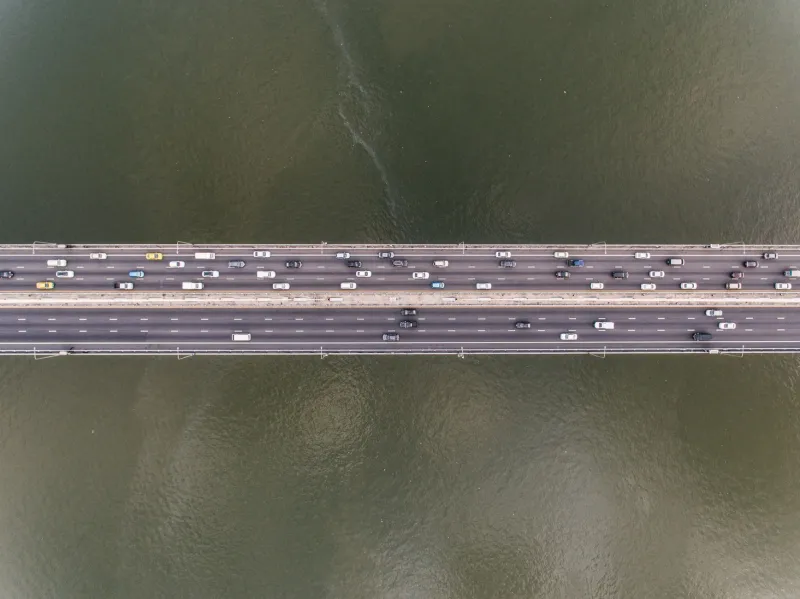
Choke points are the introverts of map design: narrow, uncomfortable, and responsible for more social interaction than anyone wants to admit. A single bridge between two landmasses forces players to share space. A one-block-wide canyon path makes passing someone a negotiation. Do you let them through? Do you fight? Do you both stand there doing the crouch dance like two Roomba vacuums trying to figure out a doorway?
Mapmakers who know what they're doing use this on purpose. A well-placed choke point can turn a hostile map into a buddy-cop movie. A badly placed one can turn a friendly server into a grudge-holding simulator where nobody remembers why they hate the guy at the bridge, only that they do, deeply, in their bones.
"Choke points are where your server's culture gets written," Ortiz says. "If the only way to the good loot is through a tiny tunnel, players will either cooperate or establish a dictatorship. There's no in-between. You're basically handing them a constitution and a rock."
When Mapmaking Goes Full Behavioral Science (Oops)
Sometimes admins get inspired and decide to "nudge" player behavior with map design. A little asymmetry here, a little forced proximity there. It's all fun and games until your server turns into a Stanford prison experiment with creepers.
Kim recalls a build where he placed the starter village and the advanced crafting hub on opposite sides of a river with exactly two crossing points. He figured it'd create a nice little commute, maybe some light trading. Instead, players formed two rival neighborhoods, invented a border dispute, and spent a week arguing about bridge taxes in global chat.
"I accidentally made a municipal government," he says. "They elected a mayor. The mayor was a 14-year-old. It was the most functional government I've ever seen."
That's the double-edged sword of social engineering through terrain. You can encourage teamwork, trade, and community. You can also create faction warfare between people who were perfectly happy ignoring each other five minutes ago. The map is always talking. Your job is to decide whether it's saying "welcome" or "fight me."
What Admins Can Actually Do With This (Without Becoming a Bond Villain)
You don't need a psychology degree to build better social maps. You need a little empathy and a willingness to watch how players actually behave instead of how you hoped they would.
Start by auditing your spawn. Is there a reason to stay? A reason to talk? A reason to come back? If the answer is "the rules hologram is very readable," you've got work to do. Next, look at your resources. Are they creating fun friction or grim scarcity? There's a difference between "players cooperate to get the good stuff" and "players form a water cartel and someone builds a bucket shrine." One is content. The other is a hostage situation.
Finally, test your choke points. If every path to the good stuff is a single-file hallway, you've built a stress machine. If there are multiple routes with different trade-offs, you've built a playground. Playgrounds make friends. Hallways make enemies. Choose wisely.
The Uncomfortable Truth: Your Map Has Opinions
Here's the thing nobody tells you when you download a world file: your map is not neutral. It has a worldview. It believes certain things about how people should interact, where they should go, and what they should fight over. You might think you're just placing blocks. You're actually writing a social contract in dirt and cobblestone.
The best mapmakers know this and lean into it. The worst ones don't, and their servers turn into ghost towns with really nice terrain. So the next time you're building spawn, ask yourself one question: what kind of experiment am I running today? Then maybe move the water source a little farther from the bridge. Trust us. Your future mayor will thank you.